All Hands Meeting at Instarama (October 18)

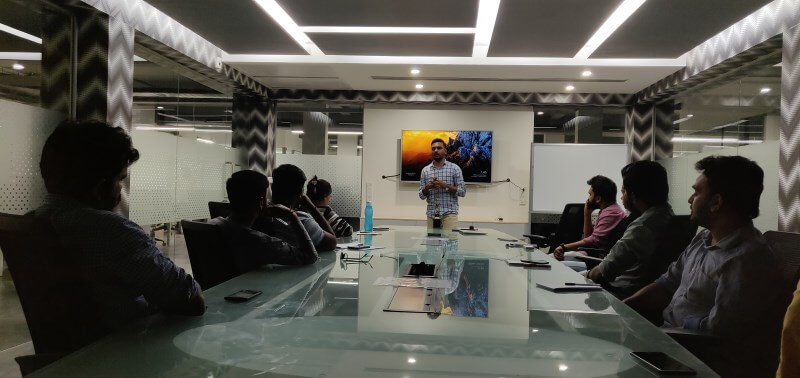
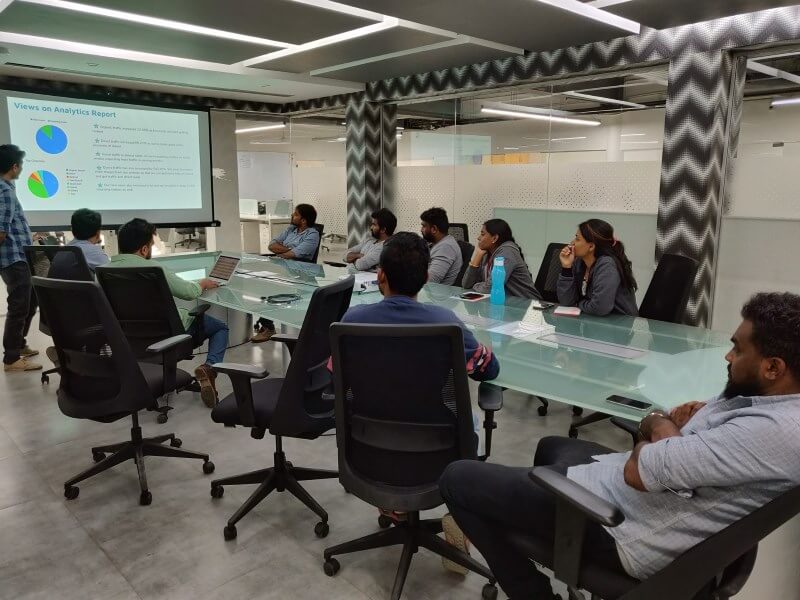
To align our team members on their way, we host regular all-hands meetings. The last all-hands meeting at Instarama was a successful one and we got a clearer picture of what is next to achieve. Like our previous all-hands meeting, this month too saw an enthusiastic participation by all the members.

With what we planned in last month’s meeting, we were able to focus on some meaningful and long-term decisions. However, this time did not only focussed on our business goals but also took out some time to celebrate the accomplishments of our best performing team members.

Primarily, we discussed on the marketing and sales achievements of the September month, targets for the upcoming October month, product updates, product customization, and the customer feedback to help us enhance the product development process. Here are some highlights on the same.

Marketing and sales accomplishments

Adent saw a slight decrease in overall traffic as compared to that of August. However, we were able to reduce the overall bounce rate by a considerable 4%-5 %. This is a good sign considering we eliminated most of the spam traffic with our efforts and migrated from HTTP to HTTPS. The other modes of traffic like Organic and Quora experienced growth, where we achieved some quality traffic by reducing the spam traffic. It worked, and we were able to increase the direct traffic and regulate the bounce rates on all the projects. There was an incline with a small downfall in Referral traffic. However, with the overall bounce rate decreased by 3% it is a good deal for us. There was an increased engagement from Spain, in addition to the regular increase in traffic from UK and US. The best sales figures came from xCams and xStreamer. However, we also saw a positive response in xMarket, where the sales were quite rapid as compared to the last month’s data.

All hands Meeting Oct_1

There was a positive change with PushMaze, where we were happy despite 3-4% decrease in traffic. It is because the overall bounce rates were regulated massively by 6% and we saw a 30% increase in the overall sessions. It is a good sign considering, PushMaze’s keywords are constantly ranking up on Google’s SERPS. Same goes to ShopyGen, where there was a slight decrease in the traffic, but still, the overall bounce rate was regulated by over 7%. StreamHash witnessed an increase in the number of interests shown in the website through signups with 70% traffic from organic sources and 69 keywords being positioned on the first page of Google SERPs. The highest audience engagement rate for StreamHash, PushMaze, and ShopyGen was from the US, UK, Brazil, and Canada.

Targets

Aiming at the continuous product enhancements, we also discussed the plan for expected sales and marketing to be realized in the October month. We would continue to filter the traffic to get the quality leads and decrease overall bounce rates on all our projects. We aim to increase the quality traffic for Adent by at least 15% and get as many signups. For ShopyGen, and Stream hash, we are aiming to employ micro-personalization in our overall marketing tactics to get highly segmented audience for the corresponding products. Hence, the overall target is to get as many quality traffic with reduced bounce rate and increased sign-ups and decrease the spam traffic. We plan to increase our presence on social media profile and engage our followers with both product and utility information. The aim is getting at least 20% increase in the social media referrals.

Product upgrades

ShopyGen is working on launching its new product UberX, while it is working on the next version of GenStore too. We will soon be launching the xTalk and xMarketplace’s latest version. For StreamHash, the main customizations include Offline videos on StreamView and introduction of Many-to-Many stream feature in StreamNow.

Feedback and Improvement

As per the suggestions and feedback from our ShopyGen clients, we are in process of modifying the UI, Adding new payment options, and adding category subscription option in ShopyGen. We are adding one-to-one communication in StreamNow, and support for some new languages in TubeNow.

“Best performer of the month”

Employees desire to learn and grow. They fancy success in their career, recognition for their efforts, and all the rewards that go along with being the best. We have the bests among us. So why not reward them for being so. As captain of this team, my job is doing anything it takes to squeeze the best performance from my team, and set them up for a bigger run. Therefore, we took the advantage of our monthly all-hands meeting to introduce the rewards system before this month itself. In the process to find our next best performer of the month, we analyzed the environment that kept our warriors engaged, alert, and ultimately excited for work.

It was a tight contest!

We wanted to give everyone a fair chance to claim the title. Therefore, we set some tough grounds for the contest and evaluated all our Instarama warriors on them.

The top three nominees were –

Srividya Sigamani– For her excellent work in taking StreamHash to new heights by employing her dedicated and strategic marketing tactics. She plays a vital role in helping Instarama and does much more than she is expected to do.

Nitin– A highly professional young men, walking with the hectic burden of sales department for Adent and Shopygen. His work in increasing the revenue and client acquisition rate for Shopygen and Adent was more than enough to grant him the title.

Vinay– The newly joined professional who is working with us as a content developer. He is taking care of content development for all the projects. Very disciplined and always ready to give his 200% to deliver the content on time. It is a tough task to deliver punctuality, discipline blended with high-quality content. However, nothing less could have been expected from a well-deserved candidate in our list.

All hands Meeting Oct_3

Winner: By thoroughly weighing the nominees based on numerous aspects, it was Vinay who grabbed Instarama’s Second “Employee of the month” award. His individual exertions aimed at Content Development remained unquestionably to be cherished and each Instarama warrior agreed that he strappingly merited it due to his supreme enthusiasm and commitment to his job. Congrats Vinay, You deserved it.

Instarama’s all Hands Meeting – (Sept 2018)

Appreciation at work is something that is very crucial for an employee to confirm if their work is valued at the organization. For a company, it is about timely recognition of an employee’s behavior, effort or business result that supports its goals and values, clearly beyond the normal expectations.

At Instarama, we strongly believe that the employee happiness and growth have a direct impact on how we function, and therefore help us to clearly determine where we stand in our journey. Hence, we decided to evaluate our employees based on various factors such as discipline, target closures, ownership, new initiatives and team work, and have the “best performer” award given to them each month during our all hands meeting.

In the recent all hands meet that commenced on 11th September 2018, we had a discussion on the August month’s marketing and sales achievements, the targets for the month of September, product upgrades, feedback and had the “best performer” for the month of August 2018.

Best Performer for the Month of August 2018

It is never easy to closely analyze and judge the highest overall performer, especially among employees with infinite zeal like at Instarama. Hence, there was a stiff competition between the employees to bag Instarama’s first “Employee of the month” award.

Among the top three nominees were Tanmay Sarkar (for his work in taking Adent to new heights by employing new and strategic marketing tactics, playing a vital role in helping Instarama to structure their workflow), Yadhunandan (for his work in increasing the revenue and client acquisition rate for StreamHash with new and streamlined strategies, and also taking care of StreamHash’s post-sales, integrating with the developers to deliver the customer requests and clearing their queries in-time) and Sharmila Panda (for her impeccable rate of punctuality and discipline, and for her work  in improvising the quality traction of visitors to PushMaze).

Closely evaluating the nominees based on various factors, it was Yadhunandan who seized Instarama’s First “Employee of the month” award, whose sole efforts for StreamHash were definitely to be appreciated and every employee felt that he strongly deserved it due to his unparalleled dedication. Congrats Yadhunandan!

Marketing and Sales Accomplishments

Adent saw over 15% increase in their overall traffic in August’18 as compared to that of July’s. Social media witnessed a growth of over 120%, and referral traffic went up to 85% for Adent. Other modes of visitor traction like Organic and Quora also saw an incline with a small downfall in direct traffic. There was an increased engagement seen from the audience in UK and Canada. Among its products, xCams and xStreamer had the highest number of Sales, and xMember and xModes had an increase in the number of enquiries as compared to that of July’s.

With the keyword ranking going up, PushMaze too saw an overall increase in the visitor traction from all the channels. ShopyGen’s direct traffic rose up, and StreamHash witnessed an increase in the number of interests shown in the website through signups. The highest audience engagement rate for StreamHash, PushMaze and ShopyGen were from the US market. Among StreamHash’s products, StreamView was the most popular, making the maximum Sales numbers.

Targets

Continuous betterment in product enhancements, sales and marketing numbers in August as compared to the month of July has obviously brought in higher expectations for September 2018. Adent’s expectations are to increase the overall number of website visitors by 15% and prospects an upsurge in the signup rates. ShopyGen looks forward in employing highly segmented targeting strategies to improve the quality of visits and enquires by at-least 20%. StreamHash focuses on improvising the website traffic from its social media, direct and organic sources.

Product Upgrades

Adent is working on launching its new product xTalk, and xMarketplace’s revamped version is expected to launch by this month. For StreamHash, the main upgrades were on StreamView (Options for category subscription, Offline video access in mobile application, RTMP live streaming and adaptive streaming) and TubeNow. ShopyGen is working on optimizing its service marketplace clone script Gentack, with enhanced accessibility features and the version 2.0 is expected to launch soon.

Feedback and improvements

There were personalized UI customization requests from some of Adent’s clients for xCams and xStreamer.

All hands meeting at Instarama (Aug’18)

Taking time to assess the progress, mission and the direction we are heading is essential in every organization’s growth journey. This should happen frequently, in a monthly or a quarterly basis, and setting short term goals can highly influence the decision making process, uncovering the path to reach the main objectives.

At Instarama, we have found that a monthly all hands meeting can help us focus better on making meaningful, long-term decisions. We aim to demonstrate our organization’s values of accountability and trust by being transparent on how it functions. The time we spent together, to discuss and evaluate our activities is helping our teams grow and build a shared understanding of our mission. With us catering products of multiple verticals, the all-hands meetings help us to connect with each other, take time to reflect our progress and align our goals accordingly for the upcoming month.

In the recent all-hands meeting that commenced on 07th August 2018, we had discussed on the marketing and sales achievements of the past month (July’s), targets for the upcoming month (August), product updates and the customer feedback to help us enhance the product development process. Here are some highlights on the same.

Marketing and sales accomplishments

Adent saw an overall increase in traffic on organic searches, online and social media. Among the mediums, Quora witnessed a 500% growth in engagement in July 2018 as compared to June’s, and the maximum traffic pour was from United States. StreamHash, PushMaze and ShopyGen saw an incline in their organic, direct and Quora traffic and a small downfall in that of paid online and social media. StreamHash and ShopyGen saw an increase in the number of unique visits to the website.

The sales of Adent rose up to 40% in July’18 as compared to June’18, with the highest interest shown towards xStreamer, its video streaming and tube script. Notably, xCams witnessed the maximum increase in sales over month. ShopyGen too witnessed an increase in their sales with its multi-vendor eCommerce marketplace, GenStore performing above limits.

Targets

The route to success is built on a constant improvement on everything we are doing. With July month’s overall rise in the marketing and sales achievements, there were high expectations for the forthcoming month. ShopyGen and StreamHash’s main focus was on the USA, UK and Australian markets, and to increase their organic, paid online and social media engagement by at-least 40%. Adent’s plans were to increase their overall online traffic up to 30%, by targeting mediums like Instagram, Quora, YouTube and the affiliate partners.

Product upgrades

Adent’s key customizations were on xStreamer (giving users the option of Premium HD video quality) and xMember (unification of sites, where a user can integrate two or more of their websites under a single functionality). For StreamHash, dynamic landing pages and per-day based subscription plans for StreamTube was included. StreamView’s new version (3.0) upgrades include Landing page changes and additional cast features. ShopyGen’s GenTask had a few customizations done based on the clients’ request, on their respective stores.

Feedback and Improvement

Operational excellence doesn’t spring from anywhere but from the feedback of our clients. We have continuously revamped our products based on the customer feedback, which had made it possible for us to stand among the best turnkey solution providers in the market.

Additional languages, auto-signout and live streaming options were requested by StreamHash’s clients and our tech teams have started optimizing on the requests. Based on the feedback from Adent’s clients, xCams v2.0 is set to launch this month with Kurento tech integration, along with xMarketplace’s upgraded version. ShopyGen’s GenTack, GenTask and GenStore had received a significant amount of feedback, requesting additional design customization features and dynamic homepages.

Giving us an opportunity to work with other team members that we wouldn’t normally interact with, the all-hands meeting helped us to exchange ideas and form links that will strengthen the organization as a whole.

Life at Instarama

The influence of a right workplace on creativity and innovation among employees is exceptional. Well established companies like Google and Facebook, when they started had only one thing in mind. To give their employees a space that can naturally enhance collectiveness and effective communication. 

As a leading turnkey solutions provider, Instarama’s recent relocation was a strategic move to create an ideal work culture for employees, helping them pour innovative ideas and take the company to newer and unseen heights.

Work-life balance or work-life integration?

“They say there should be a proper work-life balance. But, for us, it is about work-life integration, because at the end of the day, it comes down to how worthwhile the time we spent was” – Says Srivathsan GK, the CEO of Instarama.

The current workspace provides diverse options for the employees. When they are stuck with something, taking a break for a game, or having a casual espresso conversation in the lush green lawn can help to refresh the minds in a moment.

“We come to work, to see our friends, discuss and have fun here. And most importantly, we enjoy our new workplace” – Say the employees at Instarama.

Workspace upgradation doesn’t just mean relocating the resources and amenities but will have a comprehensive impact on all the aspects of how an organization as-well-as its individual’s work. 

When asked Abiwad, who is the COO at Instarama, he says that “We look at our team as real people, with ideas, aspirations, accomplishments and challenges, within the workplace, as well as outside of it. They are not means to generate business results, but a formidable resource that needs to be nurtured in order to deliver on what’s expected from them as employees.” 

As a budding firm that offers turnkey solutions for multiple industry verticals, it is very essential to have an environment that provides enough resources that keep the employees’ minds fresh, helping them spark new, innovative ideas, and Instarama’s new workplace definitely fulfills it. 

“An employee spends a majority of his/her 24 hours in his/her workplace. Hence, it is of utmost importance and we have made sure that the current workplace includes all the elements of fun, support, openness and care. In fact, we have witnessed an active participation, collaboration, work distribution, and team spirit after creating a positive environment for them to work on.” Says Binesh, who is the CMO at Instarama.

A game a day can keep the stress away!

‘Stress’ is an important factor to consider wherever there is innovation involved. A research says that playing games can impact the brain positively by increasing motivation, improving memory, drive efficiency, and even enhance the empathy in your team. Instarama’s new workplace provides multiple indoor game activities like table tennis, foosball, and carom and are accessible to employees anytime during their work hours.

Socialize and encouraging friendships

Having moved into a workspace where multiple organizations work, Instarama encourages its employees to develop a culture of ‘compassionate love’, where they can see how other teams and organizations function, take and give motivation to them, care and share. Also, there are frequent employee-engagement activities conducted in the workplace where they can team-up and interact with other employees. 

Mobile apps Vs Chat bots – What does your business need?

Opportunities for business expansion in the present day digital world are aplenty. Every business requires a website to display its content. The world is shifting to an era where the usage of mobile devices shall no longer be confined to just towns or cities. For all intents and purposes, mobile devices shall be used in every village. The big question is – Should companies focus on the development of their apps and lay emphasis on the so-called ‘chatbots’?

MOBILE APPS IN THE MARKET

It would be a fallacy to admit that the attention towards apps or chatbots is less. It is indeed a wrong perception that no one cares about apps. There is a good chunk of people who pay attention to apps. That being said, the odds in favor of your mobile app adoption by your target audiences are very low. This applies to the mobile apps of core companies as well. Thousands of fresh apps hit the Android and iOS app stores every month and needless to say, many are duds.

Mobile apps require new features which do not mirror website content. If your app displays the same content with the same features manifested in your website, then it makes little sense to develop a separate mobile application. It just makes sense to develop a mobile-optimized website by using Bootstrap framework.

Mobile Apps

Facebook, the largest social networking site, developed different apps integrated with the Facebook chatbot, and messenger chatbot to ensure a better experience for the consumers in both social networking and private networking. For the better reception of your apps in the market, extra features should be added. And yes, mobile apps should be updated frequently by the developers. Updating an app is expensive and time-consuming.

Platforms which facilitate team collaboration and communication such as Skype have already done a lot of business development by creating dedicated messaging chatbots and video calling mobile app. Billion plus users are already using this service. And yes, Skype for business is in the good books of corporations.

Chatbots vs. Apps

Mobile apps Vs Chat bots

Time

Chatbots are accessible through websites and are visible to search. More often than not, chatbot development takes less time than mobile app development. Developers use services such as SnatchBot or Sprout for creating a chatbot with multi-tasking functionality.

Feasibility

By following simple logical steps and by understanding the customers’ requests through a series of text messages, the bot guides the customers to their requested services. If a new request has been made by a customer, the request will be added to the wish-list and shall be brought to the attention of customer service/support staff team. The support staff analyses the request. If the requested service is unfeasible, the support staff politely mention the unfeasibility of the idea to the customer. While discussing the feasibility of the idea, the support staff approach the community of developers.

Funds

Creating and launching a chatbot will be easier than releasing funds for app development. There are some other reasons for adopting chat-bots in the first place. According to an IT research, in the coming years, the computer and Smartphone conversations shall start with chatbots. Every business company adopts chatbot technology since 75% of minor issues shall be easily solved by the bots; it is profitable and time-saving.

Many international brands and retailers still depend on their apps for small businesses. The importance of apps in the market shrinks as and when chatbots handle the requests of clients. As the adoption of social media in the market rapidly increases, you can have your business related chatbots integrated with Facebook. Not only is this time saving but also inexpensive.

There are many chat-bot development agencies which help entrepreneurs set up their online businesses. Instarama.net is one of them. Instarama.net has a team of professional web developers, mobile application developers, and chat-bot developers. Their growth hacking team has immense knowledge of e-commerce, digital marketing, push notifications, learning management software etc. They are known for their reliable and cost-effective services.

 Why should you trust a chat-bot development agency to develop your bot?

After the introduction of chat-bots, many agencies which create and develop chat-bots have been set-up. Many agencies are known to offer free services. In this situation trusting an agency for the development of bots that cater to your requirements will not be an easy job. Chat-bots are powerful interfaces which can go beyond your expectations. A brief study and better testing is needed before striking any business deals with chatbot development agencies. There are many factors to be considered while hiring a chat-bot agency.

Outsource

 Every individual or company may not have sufficient time for the design and development of bots. For many start-ups, using bots to facilitate customer service might be a simple experiment. In such a situation, chat-bot agencies will be a great solution. Also, hiring a single developer to develop bots may not be a viable option as excessive reliance on a single soul may result in too many problems. Hiring an agency for this job might be expensive, but it faster and is worth full of every buck you invest.

Experience

Chat-bot agencies such as Instarama.net have knowledge about the design and development of bots and a lot of experience. This is the main reason why you should trust chat-bot agencies. Chat-bot agencies shall solicit each and every single detail regarding the bot. This typically involves the type of products to be sold, target audiences etc. According to your requirements, they build chatbots which run smoothly. Chatbots developed by Instarama can handle a lot of customer queries. Thanks to their aeons of experience, the agencies guide you throughout the development process of your bots, especially with reference to parameters such as the personality and the type of conversation the bots should have with customers.

Integrations

Adding social integrations such as account linking, CRM, domotics (home automation) etc., will help in tracking the movement data and improves the business relationship with the customers. Without these integrations, the bot is nothing but a website which contains a heap of information about the listed products.

Research

A proper research should be done before hiring an agency. Agency should have a history of designing public bots. Read the customer reviews and testimonials. Speak to the support staff of the agency. Get your doubts sorted. Negotiate with them and seal the deal.

Success of chat-bots over mobile apps

Facebook also took a step forward towards e-commerce business through Facebook chat-bots. Facebook chat-bot development team gave an official name to it as the messenger chat-bot. The CEO of Facebook explained that with Artificial intelligence (AI) as its working language combined with human help, one can talk with the Facebook chat-bots. Through the messenger chat-bot, one can do more than just texting. Hotel reservations, air tickets booking etc., can be done through the e-commerce inclusion in the bots.

Developers can build their personal Facebook messenger chat-bots by working with co-workers. However, there is a caveat with Artificial Intelligence. Facebook bots- Bob and Alice were forcibly shutdowns because they started communicating in a language which couldn’t be comprehended by humans. Artificial Intelligence has its own perks and its own set of perils. 

Development of mobile apps using Facebook chatbots

With the advancements in Artificial Intelligence, demands for chat-bots have increased rapidly. Here are a few popular chat-bots:

  • Niki.ai

Niki.ai

It is an Artificial Intelligence powered bot. It helps in getting things done through a quick chat.  Not only can it do general actions such as booking bus and movie tickets, recharges, bill payment but also complex actions such as inter-bank transactions etc.

  • Health Tap

HealthTap

A messenger chat-bot which helps people in getting answers regarding health issues from the physicians across the globe, for free of cost.

  • Poncho

Poncho Chatbot

It is called as weather cat. This chatbot helps in giving suggestions on the clothing you should wear on that particular day after analyzing the weather conditions.

  • CNN

CNN chatbot

It is a Facebook messenger chatbot which categorizes the news according to your interests

  • Meme Generator bot

It is a messenger chatbot which makes the everyday conversations interesting by creating appropriate memes.

Conclusion

The race between the mobile apps and chat-bots has become more intense nowadays. Each has its importance, but after comparing the pros and cons, chat-bots outwit mobile-apps. They play a major role in enabling better conversation and maintaining a relationship with the customers.

If you have any doubts or concerns, feel free to drop a line or two in the comments section. I shall reply in a day or two. Keep watching this space to learn more about facebook chatbots and messenger chatbots. Subscribe to our newsletter to keep yourself abreast of facebook messenger chatbots. My best wishes are to you and your venture. Cheers!

Build Custom Software Vs. Buying a Readymade Turnkey solution

In today’s increasingly tech savvy world, firms across all sectors are eagerly upgrading their IT systems with world class software to promote their online business. For some firms, the software solutions serve as a competitive advantage, while for others, they are just a means to the end, a facilitator for the projection of the real competitive advantage. A key question facing all these firms is whether to buy their software from the various ready-made options available online or to develop an in-house software custom built to suit all their unique needs. To be able to answer this question, we first need to understand all details related to both custom software and ready-made turnkey solutions. The following guide will help you pick the one best for your requirements.

CUSTOM SOFTWARE:-

What is custom software?

When a company builds a software for itself and gets it specially made just for its company, it is called custom software. It is developed for a single customer only and pays attention to their preferences and expectations. Choosing custom software is like getting a software made by a tailor to fit the e-commerce business or any other business perfectly. Development of such online software is a complicated and elaborate process. It is just like building a house. One needs to consider three important things while building such an online software:

  1. Requirements of the company
  2. The layout and development plan of the software
  3. Testing of the software

All these three steps are very elaborate. To list the requirements of the company is alone a huge task as one needs to be very careful and make no mistakes. The unique selling point of custom software is that it is tailor made for the company. The layout and development plan are all about putting everything together and assembling the software. The testing part is very crucial as if anything goes wrong, the software has to be built again or if there is any flaw, it has to be changed or rectified.

Why choose custom build software?

Every business is different and has some uniqueness. With custom build software, one can fulfil its specialized needs, simplify business and be different from other firms using canned software.

By using the same software as others, we limit our mindset to that software. Whereas getting a custom build online software helps to establish a vision and do something different than the crowd.

Getting a custom software is very advantageous for an e-commerce business as there are more integrations and compatibility in the work done by the company. Furthermore, the company gets a competitive advantage over other companies which are stuck using the same canned software.

Benefits of Custom Software:

  1. Increase in Efficiency Such online software helps in enhancing the company and provides an increase in efficiency. As it is tailor made for the company, it help’s satisfy the client’s online business requirements.
  2. Flexibility Unlike the packaged software, this software can be changed as and when the client pleases to do so. With the changing online business environment, the needs of a company also keep on changing and having a custom build software helps with this. For all intents and purposes, a custom built software can always be scaled to accommodate the changes in the business process over time.
  3. Security As no one else has the same online software, one can feel secure that no one will hack into the system. For further protection, one can take whatever security measure deems fit which might not be the case for packaged software.

Limitations of Custom Software:

While there are many pros to selecting a custom software for one’s company, there are an equal amount of cons as well. Building a custom made online software takes up a lot of time and also costs a lot in few cases where the specifications are very different. Keeping the online software up to date is another task in itself as it takes weeks sometimes to get all the bugs out. In case some bugs remain un-noticed, they can cause critical errors. Once the company is shut or over with that section of their online business, the software is obsolete and cannot be reused. With packaged software, one knows how it works and what to do but in this case, everything is different and this creates problems in handling the software.

So just like a coin has two sides, even building custom made software might either be beneficial or may cause a huge loss in terms of time and money. 

READY-MADE TURNKEY SOFTWARE

What is a Turnkey Software?

A ready-made online software is one that is readily available for n number of problems, can be sold to any buyer and is ready for instant use. They are developed for all users in general and do not focus on any particular specification. Since such software has a rigid structure, the same software can’t be used by all. For example, an accounting firm will find ‘Tally’ more useful than some software used in a game. Just like every business targets a group of people, the same is done while making a ready-made turnkey software.

Such online software is very famous and used by almost every other firm. It is cheaper and easily available in the market. Since it is used by many people, the creators of such software are able to provide easier updates. Everyone is familiar with how the online software work and do not need to be updated on the recent technologies. The ready-made software is definitely a better option than building a custom made software for some online businesses.

In the past few years, hundreds of such turnkey software have come up that provide an automated solution for almost everything. These turnkey solutions have had a huge impact on everyone’s life as they are available for all types of online business and are affordable too. Such software have made the automation of various tasks much easier as one just needs to follow the rules and limitations of such software. Packaged software is also known as canned software, has much more benefits than building software has.

Benefits of Packaged Software:

  1. Cost – It is cheap and easily available. One can use it instantly and does not have to waste time in the set up of such online software. They are much more economical and user-friendly. Even though they are rigid, they do provide all the services that an average size firm is looking for in the software implemented within their systems
  2. Easy implementation ensures time-saving – Buying and implementing a turnkey solution doesn’t take long. You shortlist the vendor and have them incorporate the software in your enterprise’s architecture. However, building it takes much longer as you have to keep piloting it to get rid of the bugs and it is often difficult to predict exactly how long it might take.
  3. Generic needs – For basic needs like record keeping, managing sales, setting up a bonus card system and so on, software is easily available. The online software have been implemented by many and can thus, be vouched for as well.

When a business is in its budding stage and is a bit short on both time and money it should always go for ready-made software as they are much cheaper than building an online software. In a case of businesses where competitiveness of the firm is not affected by technology, choosing a canned software is a much better option as it is easier to handle and maintain.

Limitations of Turnkey Software:

Since such software is very rigid, they might not support all types of appliances. For example, window based software supports only laser jet printer and so on. Furthermore, sometimes such canned software fails to meet some specific wants of the customers and might not be the ideal choice.

This software doesn’t have very good backing up capacity. So, if the data in such software gets lost it might be a bit difficult to recover the entire thing. Also, as these are already built and no changes can be made, there are limits to the security they give a company and might not be suitable for big firms who cannot risk getting their data stolen.

CONCLUSION – Why should one choose ready-made software or building a custom made software?

Comparing the two types of online softwares on various metrics we can conclude that ready-made software is a cheaper and more hassle free solution.

Budget – Ready-made software cost significantly lesser than custom built software as they are sold by the developer to a number of online businesses allowing them to reduce charges compared to one who develops and sells a software to single business.

Comfort – Ready-made software is more easily designed and implemented. Developing custom software takes a lot of time as was described as one of its major cons. Additionally, after putting in all that effort, there is no guarantee that it’ll function as expected.

Fulfilment – Ready-made software fulfil most of the online business’ needs and thus, is as good a solution as custom built software and comes with lesser hassle and monetary requirements.

Competitive Advantage – This is one metric where custom software does better than ready-made. While the former can create a competitive advantage for a firm, the latter can’t. Ready-made software is designed keeping in mind a generic set of needs. Thus, for any online business acquiring it, it’ll fulfil most of its demands but never all. On the other hand, since custom software is built to fit the firm’s architecture it generally fulfils all its criteria. This can be a major advantage that custom built software has over ready-made. However, it is relevant only in situations where the firm is tech oriented and needs such an advantage.

The main conclusion that can be drawn here is that there is no one correct answer. Depending on the kind of online business, and the kind of requirements it has one can select between turnkey solutions and custom built ones.

If you have any doubts or concerns, feel free to drop a line or two in the comments section. I shall reply in a day or two. Keep watching this space for informative insights on custom software and ready-made turnkey software. Subscribe to our newsletter to keep yourself abreast of developments in the software industry. My best wishes are with you and your firm. Cheers! 

Author: Raghavendra Pokuri

Raghavendra Pokuri is a passionate content marketer. He previously worked as a Content Developer for a couple of startups. His interests include Behavioural Economics, E-commerce, and Blogging. When he is not pursuing his interests, he is busy cooking. He has expertise and experience in Digital Marketing. He can be reached on LinkedIn

31 Things to Know Before Building your Software Product

Software products are conspicuously present in every walk of our life. Right from setting an alarm to using Google Maps to reach our destination, software has become the soul and face of mankind. Very often, we see bigwig companies anchoring software products with effortless ease. Uber came up with a cracker of an app to ensure that commuters do not face any visible signs of disenchantment. When Amazon understood the intricacies involved in brick and mortar business, it came up with Amazon.com, the reputed B2C eCommerce marketplace. Today, technocrats and honchos such as Mark Zuckerberg and Elon Musk are engaged in a battle of words as far as their opinions on Artificial Intelligence are concerned. It takes a genius to identify the gaps and voids, and indisputably, technology revolutionizes solutions which aim to bridge the gaps and voids. That being said, one must pay attention to the following 50 things before building a software product:

  1. Software Sustainability:

At the very outset, think of building a sustainable software. Building a software which lasts only for a few months or a couple of years is of not much use. Building a software from scratch is not only time consuming but only expensive. It is in the best interest of you and your firm that you build sustainable software for getting spirited returns.

  1. Identify Your Stakeholders:

Software product development is not simply about a bunch of guys whacking their heads with laptops and gadgets. Programmers and coders are just a part of a conspicuous umbrella called ‘Stakeholders’. Stakeholders are those people who have a say in your software product. In any software project, you can bank on the following stakeholders:

  • Business Analysts
  • Business Architects
  • Business Developers
  • Infrastructure
  • UI and UX designers
  • Quality Analysts
  • Testers
  • Production / Server Maintenance team
  • Clients

If there are any other stakeholders, identify them well in advance.

  1. Establish Expectations:

 If you are thinking of some unrealistic expectations such as becoming the next Tesla Motors within the next few weeks, you are undoubtedly living in denial. Unrealistic expectations will bring you, your team and your stakeholders under the weather. Clients often set unrealistic expectations. For instance, a prospective client may give you a deadline of 4 weeks for product development. You are very well aware that you require at-least 4 months.  

  1. Foster Project Ownership:

The classical debate: Project Ownership vs Functional ownership seldom loses its sheen. Project managers are expected to understand and meet shareholders expectations. Functional ownership is all about understanding, building and configuring the software product without paying any attention to the concerns of business analysts, infrastructure team and UI / UX designers. Project managers are expected to essay the role of responsible evangelists who treat every concern of each and every stakeholder with utmost assiduity.

  1. Build Trust:

Every odd day, we see tech honchos and subordinates engaged in spats. Spats escalate and result in incendiary altercations. According to a study by Neilson, nearly 77% of disputes can be attributed to lack of trust. Transparency builds trust. If you are transparent and open in your policies and work ethics, employees join your bandwagon with joust. Remember, trust takes years to build, seconds to break and forever to repair.

  1. Motivate Employees:

As a software project manager, it is your responsibility to upkeep and preserves the motivation of employees. More often than not, employees get de-motivated due to the magnitude of the code involved. Sometimes, the sheer enormity of proposed functional modules can spell doom on their motivation levels. To keep them motivated, conduct short meetings every alternate day. Discuss the project progress and document everything.

  1. Work in Groups:

Segment the work into various fragments. Divide your workforce into multiple small groups. To each and every small group, assign a fragment / functional module. This fosters a healthy competition amongst the groups. Look for KRAs (Key Result Areas). Set targets and benchmark the performance of groups.     

  1. Identify the Type of Software:

What is the type of software you intend to build? Is it an operational service? Does it have a pilot? What is your concept of robustness? Do you want to build a proof-of-concept demonstrator? It is important that you have answers to all these questions.

  1. Identify the Market:

Before building your software product, identify if there is any market for it. Find answers to the following questions:

  • Who are my target audiences?
  • What are the market trends?
  • What is my target customer buyer persona?
  • Do I know the buyer demographics?
  1. Acquaint Yourself with Requirements Elicitation Techniques:

It is absolutely edifying to understand all the possible requirements elicitation techniques. Right from conducting various types of interviews such as structured and unstructured interviews, oral and written, group and one-one interviews, other techniques such as surveys, questionnaires, task analysis, domain analysis, brainstorming etc., should be leveraged. For your information, structured interviews are also called closed interviews as every question is pre-decided. In case of unstructured interviews, one question leads to another question. Questions aren’t pre-decided.

  1. Get a Blueprint of Your Software Requirements:

Identify your software requirements. Take into consideration the various interfaces, functions, modules and security labels. If you are building a software product for your client, get all your requirements sorted out. In technical parlance, you are required to build an SRS (Software Requirements Specification) document.   

  1. Categorize Your Requirements:

Technically speaking, classify your software requirements into two categories: Functional and Non-functional. Functional requirements are those requirements which are relevant to the functionality of the software. Examples of functional requirements include administrative functions, compatibility of the product with various devices etc. On the other hand, non-functional requirements include implicit and explicit characteristics expected of the software. Examples of non-functional requirements are interoperability, security, flexibility, recoverability from disasters etc.

  1. Emphasize on User Interface Requirements:

User Interface defines and dictates user acceptability levels. User Interface is necessary for every software product. Following considerations fall under the broad umbrella of user interface requirements:

  • Content Presentation
  • Navigation
  • Responsive Layout
  • Default Settings
  • Feedback Mechanism

This list is by no-means exhaustive. Research a lot more on user interface requirements. Prepare a comprehensive list. 

  1. Validate Your Requirements:

Knowingly or unknowingly, consciously or unconsciously, ambiguities and anomalies creep into SRS document. It is therefore important to validate and cross-check your solicited functional and non-functional requirements list with your client. And yes, do validate user interface requirements as well.  

  1. Do a Feasibility Study:

Once you solicit all the requirements, do a feasibility analysis. Prepare a feasibility report. This report should focus on usability, the scope of the software, maintainability, and productivity. 

  1. Draft a Plan:

Building a software product is nothing short of climbing a mountain. Set realistic expectations when it comes to fixing timelines. The plan should essentially encompass project life-cycle, various phases involved in project life-cycle, estimated budget, etc.

  1. Compatibility with Existing IT Systems:

This is something which software development teams should pay superior attention to. If your software product is not compatible with existing IT systems, do not go-ahead. It just results in a pile of mess. Complex software products often require too many installations, too many extensions, and undesirable plug-ins. Complex software products are as ineffective as obsolete software.

  1. Sort Out Your Financials:

Do you have enough money to initiate the project? Who are your go-to investors? Identify all your major stakeholders. Do you have money to efficiently deal with contingencies? To expect events would unspool like a pleasant dream is essentially embracing naiveté. 

  1. Pay Attention to Contemporary Software:

The software which you are planning to build might already exist in the market. Sometimes, the software may not exist in its entirety. Only a few components may be present. You can use those components after purchasing appropriate licenses and save precious time. In this competitive and obsessive world, time is money.

  1. Identify the Technology Stack:

The only thing constant today is change. Today’s technology is definitely going to become obsolete tomorrow. That being said, it makes a lot of sense to configure, design and build the software product by using contemporary technology stacks such as MEAN – MongoDB, Express JS, Angular JS and Node.js.  

  1. Software Size Estimation:

One of the metrics used to estimate the size of the software is KLOC – Kilo Lines of Code. As a matter of fact, lines of code depend on the coding practices. Another practical way of estimating the size of the software is identifying the number of function points. Function points vary as per the user requirements.

  1. Effort Estimation:

Effort estimation is all about estimating the number of man-hours required to program the software product. To estimate the number of man-hours required, you are required to first estimate the number of Kilo Lines of Code (KLOC). Experienced project managers are good at estimating the number of man-hours required to fulfill the task at hand.

  1. Time Estimation:

Once the size of the software and the number of man-hours is estimated, time in months is estimated. To get a holistic view of the number of months required, WBS is used. WBS stands for Work Breakthrough Structure. The essence of WBS framework lies in breaking the whole task into smaller tasks and subsequently assigning a realistic time period.  

  1. Cost Estimation:

This is somewhat different from sorting your financials. Project cost estimation has often left both experienced and amateur project managers perplexed. The following costs come under the ambit of project cost estimation:

  • Quality of software
  • Size of the software
  • Hardware
  • Training
  • Supervision
  • Testing
  • Software tools
  • Software licenses
  • Travel
  • Food
  • Communication
  • Skilled Personnel Maintenance
  1. Freelancer vs Professionals:

Freelancers are known to lend creativity to software design and development. Professionals are known to accomplish tasks at hand with utmost diligence. Taking a conscious decision of bringing a blend of freelancer and professional workforce onboard will drum up expectations and performance. Use your judgment, and do take financials into consideration before taking a decision. Very often, professionals charge you a fortune while freelancers might exact your resources. 

  1. Identification of Risks:

Crucial to software product development is risk management. More often than not, in every software product development project, there are a few risks such as the following:

  • Experienced and qualifies personnel abruptly leaving the project
  • Strategic Management executives may change
  • Mismatch of requirements
  • Misunderstanding of requirements
  • Software size underestimation
  • Improper analysis of business competition
  • Unprecedented technology changes
  • Unforeseen environmental changes
  1. Categorization of Risks:

The next big thing is to categorize all the risks based on the possible impact each risk could have on the software development project. More often than not, risks are classified into the following categories:

  • High
  • Medium
  • Low
  • Critical
  1. Monitor the Risks:

Have an Argus-eye to monitor all the risks. Identify all the possible symptoms. Cautious examination of symptoms and careful assessment of risks will help you take risk mitigation policies.

  1. Risk Response Strategies:

Regardless of the magnitude of the risk, the following four risk response strategies can be used:

  • Risk can be avoided
  • Risk can be ignored and cascaded
  • Risk can be mitigated by taking corrective actions
  • Risk can be acknowledged

Good project managers avoid risks. Great project managers acknowledge risks, take necessary corrective actions and mitigate risks. 

  1. Risk Register:

It is important to maintain a detailed document which outlines all the possible strategies, probable risk responses and proper courses of actions to be taken to mitigate risks. If the project manager changes, new project managers can go through the huge deal of information compiled in the risk register and subsequently plan risk mitigation strategies.      

  1. Test, Test, and Retest:

More often than not, software product development whips up non-performance issues. It is important to unearth all the possible fallacies and frailties well before the software product hits the markets. Do all possible types of testing such as Unit testing, integration testing, White box testing, Black box testing, Alpha testing, Beta testing etc.

Follow the aforementioned 31 things. Be patient and consistent in your efforts. Your software product will be a marvel.

We have an excellent team of software developers, growth hackers and project managers with a decade of experience. We can help you connect with them. If you have any doubts or concerns, feel free to drop a line or two in the comments section. We shall reply in a day or two. Keep watching this space for insights on Agile software development model. Subscribe to our newsletter to know more about trends in software industry. Our best wishes are with you and your software product. Cheers!

10 Websites to Learn Programming in 12 weeks

Steve Wozniak and Bill Gates might seem resolutely old fashioned, but they are high-spirited programmers. Reportedly, Mark Zuckerberg is a college drop out. However, he went on to create and build arguably the best social networking site Facebook. When every kid of his age was busy playing some games, rumor has that Bill Gates was catapulted into programming fray, called upon by his conscience to code games. Today, he is one of the smartest living legends who have seldom failed to hit the top gear of richest billionaires.

Yes, programming is fun and programmers are the real charmers of the internet. Every internet application, right from Email to Microsoft Word Document, is programmed. As a matter of fact, even the computer is programmed. Anybody with decent programming skills can build spirited and lively applications. Again, you need not move any mountains to learn programming. You just have to summon the much required patience and practice consistently to learn programming in 90 days.

The following 10 websites will lend you some impetus and will certainly fine-tune your programming skills:

Codeacademy

Many budding programming enthusiasts aren’t sure of what to learn and how to begin with programming. Codeacademy is a place to learn fundamentals and experiment with new languages. You are not required to download and install any software. You can write your code in a browser-enabled editor. The good part about this website is that it has very good interactive tutorials. If you are looking to master the nuances of web development,

Codeacademy is perhaps the best site. Apart from web development, you can learn the following technologies / languages:

– HTML 5, CSS, PHP and Python
– Structured Query Language
– JQuery
– Ruby on Rails
– AngularJS
– Node JS
– Java Script

Visit Codeacademy now and join its 25+ million users.

edX.org

To be the best, you have to learn from the best. edX.org is an educational marketplace where a plenty of computer science courses are listed. All the courses are free but to get a verified certificate, you have to pay $50 and sometimes more. Certificates are valued by many corporates and hence, it is common to witness thousands of students enrolling in certification programs. If you are eager to up the ante and enhance your programming prowess, you should try its “Micro Masters” program which encompasses a series of graduate level courses. This will be a valuable value addition to your CV and brain pockets.

Visit edX.org now.

Udacity

Udacity has the audacity to believe in the gospel that education is always a lifelong experience. It believes that education today is all fragmented and it aims at aggregating all the fragments through its loads of amazing and informative video content on Physics, Mathematics and Computer Science. People often get bitten by laziness bug and soon lose enthusiasm only to repent at later stages. Udacity is simply exemplary by all standards. Its tutorials are interactive and full of quizzes. This removes boredom. Most of its videos are not lengthy. They are short, sweet and simple. Udacity also offers a downloadable certificate if you complete every milestone of the course- quizzes, tests and puzzles. I personally found the following courses delightful:

– Artificial Intelligence
– HTML 5
– Python
– Web Development
– Algorithms
– Java

Visit Udacity now.

Coursera

If you are looking for tons of assignments and extremely tight schedules, Coursera is the right platform. We often see our peers holding Coursera courses to a higher standard than most other courses on other platforms. You cannot start off instantly. You have to enroll well in advance to get access to the courses. The best part about Coursera is that it partners with as many as 138 universities and organizations. While the courses are free, you are required to pay anywhere between $30 and $100 to get a certificate in a particular program / course. This online educational marketplace offers an array of 1700+ courses.

Head on to Coursera now.

Code Conquest

Programming is a field where many budding programmers face an early exodus due to the absence of helping hands. Code Conquest helps you conquer your programming hassles by lending a helping hand. If you are eager to level up your programming skills, you should definitely try it. Its knowledge center is really cool. You can learn how to develop a website and how to start a business with your own website. Learn more Code Conquest by heading on to it.

MIT Open Courseware

Massachusetts Institute of Technology Open Courseware programs resonate well with the huge community of students. Its courses are certainly effective and all its volumes of study materials can be accessed anytime and anywhere. To complete its under graduate and graduate programs, you should have tremendous patience as the courses are profoundly informative. While all the courses are self-administered, discipline is a pre-requisite without which you cannot complete assignments and home works.

Visit MIT Open Courseware now.

The Code Player

A good programmer is not that programmer who stays in the spotlight. A good programmer is that programmer who knows how to write optimized code. That block of code which has least execution time, utilizes the least amount of CPU space and resources is perhaps the best block of code. Optimized code is divine and The Code Player keeps us posted about the best optimized codes programmed from scratch by some experts. This educational website has great presentations to keep you riveted. The good part about this website is that you get exposed to real case studies. Go through the detailed descriptions provided beneath each and every video to get your foundations strong.

Visit The Code Player now.

Team Treehouse

Team Treehouse is known for its cutting edge courses on web design, web development, and iOS development. It resembles Udacity in many ways. Its services are freemium. To be precise, once the students complete the first stage of a course, they will be invited to pay a monthly subscription fee of $25 USD. This is perfectly affordable as this educational marketplace provides access to over 650 videos and Treehouse membership forums. There is also a provision to engage in freewheeling conversations with industry experts, professional programmers and seasoned veterans. Moreover, stalwarts of Computer Science will organize best of the class workshops. For this, students have to pay a monthly subscription fee of $49 USD.

Head on to Team Treehouse now.

Khan Academy

Khan Academy is a true trailblazer. It started a revolution in the field of online education and continues to be a firebrand leader. Its programming courses are not structured and lack detail. However, its courses on programming basics are worth your precious time. If you want to stay on the right course, it is recommended to get yourself enrolled in its course- Approach to Coding. Once you master the right approach to coding, you can start applying the correct approach to every programming language. By the way, I developed a small game in Java Script, all thanks to Khan Academy.

Visit Khan Academy now.

Ruby Monk

Amid the barrage of new languages and technologies, Ruby seems to be the most sought after programming language. No doubt, PHP continues to be the king of the web. However, one common trend which cannot be ignored is that many offices are switching from PHP to Ruby. Ruby is used to build TCP servers. It gives you liberty to build long lasting desktop applications. Ruby Monk focuses only on Ruby and helps you master its frameworks. The best part of this website is that the creator of Ruby – Yukihiro Matsumoto will teach you Ruby. How cool can this ever get?

Visit Ruby Monk now.

If you get the measure of programming skills, coding is all fun and exciting. It just takes 24 hours of time to learn the fundamentals of any new programming language. But to display a flair for developing feature rich applications, a lot of practice is required. Compliment the above mentioned resources with a few programming books and embark on a breakthrough journey of building amazing apps and software.

If you have any concerns, doubts or issues, do not get un-nerved for we can help you overcome them. Feel free to drop a line or two by letting us know your thoughts about programming. Subscribe to our newsletter and keep watching this space for technical stuff and life hacks. Our best wishes are with you and your endeavors. On a lighter note, here is what Bill Gates said about programming progress, “Measuring programming progress by lines of code is like measuring aircraft building progress by weight”.

Keep coding. Cheers!

Author: Raghavendra Pokuri

Raghavendra Pokuri is a passionate content marketer. He previously worked as a Content Developer for a couple of startups. His interests include Behavioural Economics, E-commerce, and Blogging. When he is not pursuing his interests, he is busy cooking. He has expertise and experience in Digital Marketing. He can be reached on LinkedIn