
Why You Should Outsource Software Development?

Business transformation programs driving at an unprecedented pace to improve the business space. Resource allocation is an important factor in developing a business. When planning a new project, the preliminary task is to evaluate its scope and to allocate the resources accordingly. This is an essential prospect for business optimization and company growth.

Outsourcing is considered as a well-rooted practice both in our professional lives and daily routines. For example, we call plumbers to fix the pipe issues, order food from online delivery apps and even pay people to look after children when we’re away. However, outsourcing in corporate sectors allows the business to distribute assets more effectively, achieve core competencies, and widen the product portfolio with saving the resources.

Outsourcing software development is not like just confined on offshoring to third world countries, but to bring the business into the next level. In today’s world of apps and software, user experience is the key to success in any business. Here in this article, we will discuss how outsourcing software development transforms and revolutionizes your business.

What was the state of software development outsourcing?

Since the past decade, many enterprises and software organizations are experiencing a rising demand for qualified software developers for growing their businesses.

Many developed countries face a challenge in finding skilled resource in technology. They also face serious concerns due to the expensive amount of resources and skilled manpower. Moreover, multiple issues connected with business development occur irrespective of the business’ size whether it is a start-up, mid-level enterprise, or a large scale company. The entrepreneurs always in search of qualified specialists with good knowledge, creativity, and flexibility. To encounter these alarming signals, the outsourced software development came into the picture and has become a trending industry.

 Look at these market size of outsourcing software development services from 2000 to 2018 according to Statista.

software dev

Benefits of outsourcing software development:

Time is crucial: Get your products to market even faster

How many times have you heard about the penetrating words from your employees: This will take a few more days to complete the project: We are trying to meet the deadlines: Often right? You’re not alone. However, you have to constantly manage these things to cope-up with your competitors and to be on the edge. To reach an edge in the dynamic competitiveness environment, timing is the key factor.  

As we know, software development is a prolonged process that requires attentive care in every step. If your internal programmers don’t finish a project before the deadlines, the sales & marketing department will face bottleneck to launch the new products to the market. In turn, the whole pressure comes under the coders to get ready for the product.  At this time of adding a few coders into the team will prove priceless for the company.

To overcome such things in your company, outsourcing software development helps with a rapid effort, adaptive planning, and timely delivery. Most businesses require the need for speed to leverage their competitive advantage. There is no point of dependency on the in-house resources for a product launch. The software outsourcing team will provide the services timely and in accordance with the schedule. With outsourcing the software, your application is guaranteed to have a timely market delivery. This obviously improves the effectiveness of your product.

 Diverse technological advances: Access to the latest technology

Technological partnership with a good software development outsourcing company provides a perfect business relation along with maximizing the profit. This is because one needs a robust software as a fundamental foundation for the company. The loyal users, successful marketing elements, and sales of products will completely depend on a great software product.

To get exposure to global talent, many countries outsource software development. They need expertise in new skills and techniques that cannot be demanded in-house because of huge resource allocation.

The business will get a brand effect across the world by expanding technical capabilities and broadening the horizon. This provides additional relaxation as the whole development to deployment is being taken care of by the outsourcing companies. With the advancement of technology, you can rather focus on marketing. You will get enough time for managing the resources and project.

The software outsourcing partners not only saves time and money but also bring innovation into the process. It is very hard to keep up with all the tech trends, but a software development partner can help you to take your product into the next level by leveraging cutting-edge technologies.

Cost Savings: Reduced cost lead to maximize profit

When you think of outsourcing software development, you will find a substantial difference in wages in developed and developing countries. Most developed countries believe to outsource their software to minimize their expenses.

There are many economically strong countries that provide top-notch services with a marginally lower cost. Instead of spending dollars of money on their own programmers, they can get the same quality service for half of the price. The companies can save almost 30 to 35% on operating costs by outsourcing their software development. 

The companies just need product quality while offshoring to developing countries. Also, companies can save a bulk amount of money in the form of employee salary and many resources when they outsource.

Streamline your business process: Focus on your core expertise in organization

Many companies often neglect the core expertise and constructive vision that brought them success. Either that may be a distinctive service, unique business model, or a better idea that helps to distinguishes it from the crowd from its competitors.

It’s better to focus on the core competencies that will increase the growth factor. For example, if coding is not your cup of coffee, and you are well suited with advanced marketing skills, then choose the best option for outsourcing your software development. Then start focusing on your marketing skills without wasting valuable time and money.

Even if you invest in hiring skilled IT engineers and manage the projects simultaneously, it will only result in late product release and delay in project submission in the workspace. Regardless, you can speed up your time in the market if you are outsourcing the projects. Thus, most start-ups, mid-sized companies, or even large scale companies tend to outsource to generate the highest value. It allows them to allocate their assets and prevent from wasting the resources. 

In today’s time, businesses need innovative tricks for development in order to survive in the market. The outsourcing of software development enhances and strengthens the core process. The in-house team will get more alignment towards business with more strategic goals. This will help in streamlining the business processes.

Better efficiency and higher effectiveness:

People often think when they conjointly hear the words outsourcing and quality. The quality of the software will completely depend on the providers. Thus choosing a better outsourcing service is necessary.

Good software contractors follow the effectiveness and quality assurance to meet customer requirements. They work deliberately for you and your clients to identify the needs of your customers.

By allotting all the related components of your business to an outsourcing vendor, you are free from resources, time, funds, and other needs associated with the project which in turn make your business more effective.

Outsourcing software development to a third-party vendor will free up a few assets and streamlines better infrastructure. Outsourcing partners hire skillful and experienced professionals to their teams. Taking advantages of your outsourcing partner’s experience will sail to a successful product.

Provides flexibility:

Outsourcing software development saves the recruiting, hiring, and training time for your projects. You need not worry about the scaling your employees in case the labor size changes for different projects. 

Final Words:

Software outsourcing maximizes flexibility. It is a great option to outsource software development projects to get the digital transformation and growth of a business. It also increases profit while reducing risks. If you want to achieve the software development goals with cost savings and project success, find a better outsourcing services company that offers digital innovation.
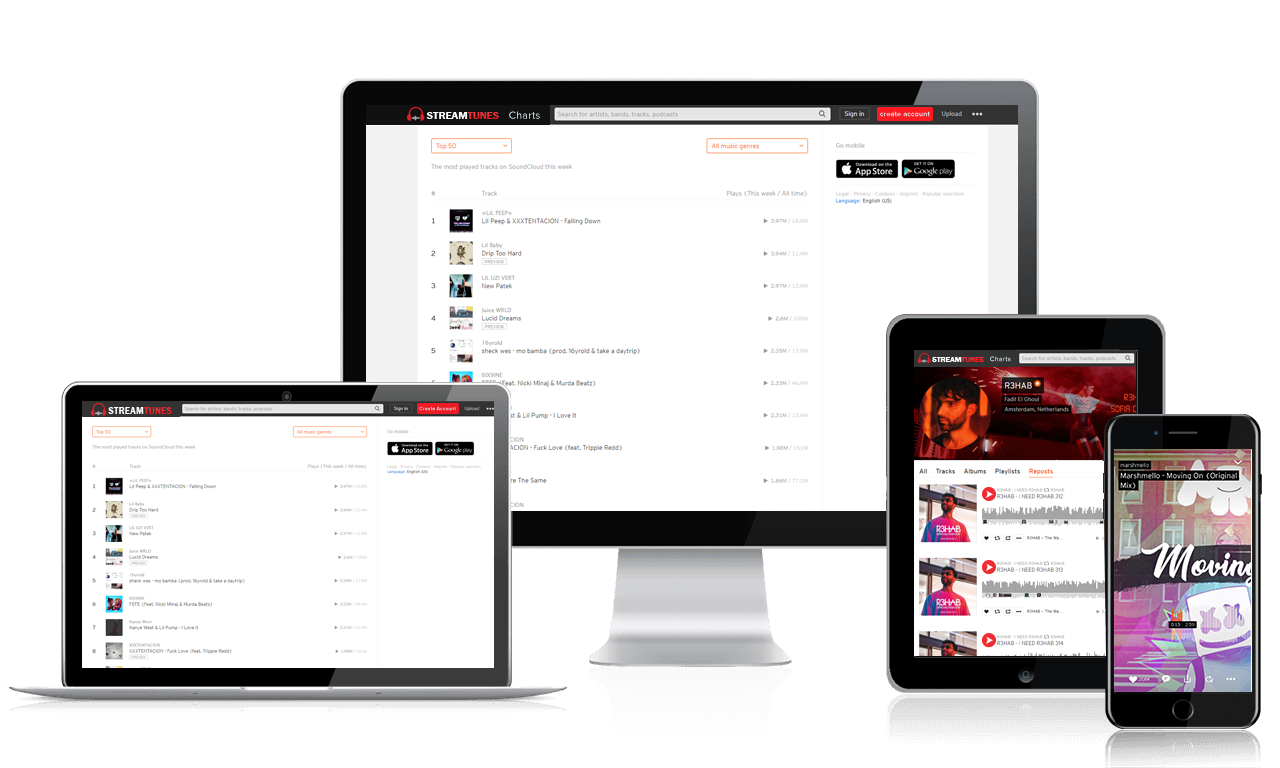

Introducing StreamTunes – SoundCloud Clone Script

It was back in 2005; they introduced Pandora to music lovers. The ability to listen to the music without filling the phone storage enticed smartphone users. Soon music streaming became a standard way, and people adopted this trend with complete acceptance. Pandora became a success story in the modern music industry.

Gradually, this shift from traditional music browsing gave rise to the online community of music lovers with SoundCloud’s music streaming and storage service. SoundCloud deviated from the regular way. Instead of asking users to listen to the uploaded music from the platform, it allowed users to upload their own music and listen to it anytime from anywhere. 

Now, in 2019, music streaming has become a standard way to browse songs. SoundCloud is the fourth highest used app for audio streaming services. 34.2% of the total US market share to be exact.

Introducing StreamTunes- Our own SoundCloud clone script

In the league of video streaming services, Instarama, under its brand, StreamHash, announces its first audio streaming script- StreamTunes. A SoundCloud clone script capable of creating SoundCloud-like business in a few hours.

StreamTunes is a ready-made framework to start your own music streaming service if you are planning in lines with the very popular SoundCloud service. It’s a fully customizable white-labeled solution coming with a complete package of WebRTC and mobile apps to kick start your own online music portal.

How does StreamTunes work?

StreamTunes is dedicated music streaming app builder. It offers multiple ways to generate active as well as passive income for the business owners.

Using StreamTunes SoundCloud clone, you can create a repository of music files and share to stream them from anywhere on any device. It gives a platform similar to YouTube video sharing community. Users can upload their audio files and share with other users on the platform.

Whom does StreamTunes cater to?

Sell your own music

The script is best suited to music artists who want to start their own music streaming services and give exposure to their creations. With a highly active community, linked with the social media platforms, they can achieve the best coverage for their music.

Sell other’s music

Even if you are not a music artist, you can use the script to create a music platform for other artists. You can let them create and share their music while you will earn from the Ad revenue as YouTube earns. Moreover, you can also add a premium subscription package, where users will pay to browse the music for the subscription period.

Tech Stack of StreamTunes

We have used the best tech stack to develop a turnkey solution for the music streaming business. Here is a glimpse of the fundamentals-

Features of StreamTunes

Here is a highlight of some cutting edge features of the SoundCloud App-

  • Seamless Audio Streaming: Nonstop audio streaming with no latency via the popular jPlayer audio streaming engine.
  • User Subscription: Subscription based membership model for revenue generation.
  • Banner Promotion: Banner-Ads promotion for passive income generation through content promotion.
  • Dynamic Admin Panel: Dynamic Admin Panel to manage the platform across all channels via central location.
  • SEO Friendly: SEO in StreamTunes to get you more quality traffic/visitors through organic search.
  • Stripe Payment Gateway: Integrated Stripe payment gateway for on-site transactions.
  • Native Mobile App: A native Android and iOS apps for scaled popularity across all the platforms.
  • Audio download: Make your tracks available offline for seamless streaming without internet.
  • Artists and Album Tagging: Tag Artist and Albums to for precise indexing, accurate search results, and tidy tracks organization.
  • Add to Favorites and Queue: Create a custom queue with your favorite track in the list in a particular order.
  • Social Sharing: Social media APIs for social login and social sharing of songs/playlist with friends.
  • Push Notifications: API for push notification service to support push alerts for different activities.

Sell on your own website/app now

Create your own music streaming platform and sell the way you want. Knowingly, having your own platform will give you a 100% share of revenue generated, and offer you the control on the monetization methods.  Despite which channel you pick, your followers will dependably realize where to discover your music and recent manifestations.

  • No middle-men
  • No commission to pay
  • No cut to pay from the revenue
  • 100% Royalty
  • 100% access to the fans’ data for outreach
  • 100% ownership of your own brand

SoundCloud clone -StreamTunes is your best bet

SoundCloud is one of the most popular music streaming apps. With this clone script, you can adopt an identical business model to start your own music streaming business. Try out our demo and experience the software before buying it. Test each of the features and tell us if you need any extra paid customization to it. We have got everything covered for you within your requirements and budget.

Build Custom Software Vs. Buying a Readymade Turnkey solution

In today’s increasingly tech savvy world, firms across all sectors are eagerly upgrading their IT systems with world class software to promote their online business. For some firms, the software solutions serve as a competitive advantage, while for others, they are just a means to the end, a facilitator for the projection of the real competitive advantage. A key question facing all these firms is whether to buy their software from the various ready-made options available online or to develop an in-house software custom built to suit all their unique needs. To be able to answer this question, we first need to understand all details related to both custom software and ready-made turnkey solutions. The following guide will help you pick the one best for your requirements.

CUSTOM SOFTWARE:-

What is custom software?

When a company builds a software for itself and gets it specially made just for its company, it is called custom software. It is developed for a single customer only and pays attention to their preferences and expectations. Choosing custom software is like getting a software made by a tailor to fit the e-commerce business or any other business perfectly. Development of such online software is a complicated and elaborate process. It is just like building a house. One needs to consider three important things while building such an online software:

  1. Requirements of the company
  2. The layout and development plan of the software
  3. Testing of the software

All these three steps are very elaborate. To list the requirements of the company is alone a huge task as one needs to be very careful and make no mistakes. The unique selling point of custom software is that it is tailor made for the company. The layout and development plan are all about putting everything together and assembling the software. The testing part is very crucial as if anything goes wrong, the software has to be built again or if there is any flaw, it has to be changed or rectified.

Why choose custom build software?

Every business is different and has some uniqueness. With custom build software, one can fulfil its specialized needs, simplify business and be different from other firms using canned software.

By using the same software as others, we limit our mindset to that software. Whereas getting a custom build online software helps to establish a vision and do something different than the crowd.

Getting a custom software is very advantageous for an e-commerce business as there are more integrations and compatibility in the work done by the company. Furthermore, the company gets a competitive advantage over other companies which are stuck using the same canned software.

Benefits of Custom Software:

  1. Increase in Efficiency Such online software helps in enhancing the company and provides an increase in efficiency. As it is tailor made for the company, it help’s satisfy the client’s online business requirements.
  2. Flexibility Unlike the packaged software, this software can be changed as and when the client pleases to do so. With the changing online business environment, the needs of a company also keep on changing and having a custom build software helps with this. For all intents and purposes, a custom built software can always be scaled to accommodate the changes in the business process over time.
  3. Security As no one else has the same online software, one can feel secure that no one will hack into the system. For further protection, one can take whatever security measure deems fit which might not be the case for packaged software.

Limitations of Custom Software:

While there are many pros to selecting a custom software for one’s company, there are an equal amount of cons as well. Building a custom made online software takes up a lot of time and also costs a lot in few cases where the specifications are very different. Keeping the online software up to date is another task in itself as it takes weeks sometimes to get all the bugs out. In case some bugs remain un-noticed, they can cause critical errors. Once the company is shut or over with that section of their online business, the software is obsolete and cannot be reused. With packaged software, one knows how it works and what to do but in this case, everything is different and this creates problems in handling the software.

So just like a coin has two sides, even building custom made software might either be beneficial or may cause a huge loss in terms of time and money. 

READY-MADE TURNKEY SOFTWARE

What is a Turnkey Software?

A ready-made online software is one that is readily available for n number of problems, can be sold to any buyer and is ready for instant use. They are developed for all users in general and do not focus on any particular specification. Since such software has a rigid structure, the same software can’t be used by all. For example, an accounting firm will find ‘Tally’ more useful than some software used in a game. Just like every business targets a group of people, the same is done while making a ready-made turnkey software.

Such online software is very famous and used by almost every other firm. It is cheaper and easily available in the market. Since it is used by many people, the creators of such software are able to provide easier updates. Everyone is familiar with how the online software work and do not need to be updated on the recent technologies. The ready-made software is definitely a better option than building a custom made software for some online businesses.

In the past few years, hundreds of such turnkey software have come up that provide an automated solution for almost everything. These turnkey solutions have had a huge impact on everyone’s life as they are available for all types of online business and are affordable too. Such software have made the automation of various tasks much easier as one just needs to follow the rules and limitations of such software. Packaged software is also known as canned software, has much more benefits than building software has.

Benefits of Packaged Software:

  1. Cost – It is cheap and easily available. One can use it instantly and does not have to waste time in the set up of such online software. They are much more economical and user-friendly. Even though they are rigid, they do provide all the services that an average size firm is looking for in the software implemented within their systems
  2. Easy implementation ensures time-saving – Buying and implementing a turnkey solution doesn’t take long. You shortlist the vendor and have them incorporate the software in your enterprise’s architecture. However, building it takes much longer as you have to keep piloting it to get rid of the bugs and it is often difficult to predict exactly how long it might take.
  3. Generic needs – For basic needs like record keeping, managing sales, setting up a bonus card system and so on, software is easily available. The online software have been implemented by many and can thus, be vouched for as well.

When a business is in its budding stage and is a bit short on both time and money it should always go for ready-made software as they are much cheaper than building an online software. In a case of businesses where competitiveness of the firm is not affected by technology, choosing a canned software is a much better option as it is easier to handle and maintain.

Limitations of Turnkey Software:

Since such software is very rigid, they might not support all types of appliances. For example, window based software supports only laser jet printer and so on. Furthermore, sometimes such canned software fails to meet some specific wants of the customers and might not be the ideal choice.

This software doesn’t have very good backing up capacity. So, if the data in such software gets lost it might be a bit difficult to recover the entire thing. Also, as these are already built and no changes can be made, there are limits to the security they give a company and might not be suitable for big firms who cannot risk getting their data stolen.

CONCLUSION – Why should one choose ready-made software or building a custom made software?

Comparing the two types of online softwares on various metrics we can conclude that ready-made software is a cheaper and more hassle free solution.

Budget – Ready-made software cost significantly lesser than custom built software as they are sold by the developer to a number of online businesses allowing them to reduce charges compared to one who develops and sells a software to single business.

Comfort – Ready-made software is more easily designed and implemented. Developing custom software takes a lot of time as was described as one of its major cons. Additionally, after putting in all that effort, there is no guarantee that it’ll function as expected.

Fulfilment – Ready-made software fulfil most of the online business’ needs and thus, is as good a solution as custom built software and comes with lesser hassle and monetary requirements.

Competitive Advantage – This is one metric where custom software does better than ready-made. While the former can create a competitive advantage for a firm, the latter can’t. Ready-made software is designed keeping in mind a generic set of needs. Thus, for any online business acquiring it, it’ll fulfil most of its demands but never all. On the other hand, since custom software is built to fit the firm’s architecture it generally fulfils all its criteria. This can be a major advantage that custom built software has over ready-made. However, it is relevant only in situations where the firm is tech oriented and needs such an advantage.

The main conclusion that can be drawn here is that there is no one correct answer. Depending on the kind of online business, and the kind of requirements it has one can select between turnkey solutions and custom built ones.

If you have any doubts or concerns, feel free to drop a line or two in the comments section. I shall reply in a day or two. Keep watching this space for informative insights on custom software and ready-made turnkey software. Subscribe to our newsletter to keep yourself abreast of developments in the software industry. My best wishes are with you and your firm. Cheers! 

Author: Raghavendra Pokuri

Raghavendra Pokuri is a passionate content marketer. He previously worked as a Content Developer for a couple of startups. His interests include Behavioural Economics, E-commerce, and Blogging. When he is not pursuing his interests, he is busy cooking. He has expertise and experience in Digital Marketing. He can be reached on LinkedIn

31 Things to Know Before Building your Software Product

Software products are conspicuously present in every walk of our life. Right from setting an alarm to using Google Maps to reach our destination, software has become the soul and face of mankind. Very often, we see bigwig companies anchoring software products with effortless ease. Uber came up with a cracker of an app to ensure that commuters do not face any visible signs of disenchantment. When Amazon understood the intricacies involved in brick and mortar business, it came up with Amazon.com, the reputed B2C eCommerce marketplace. Today, technocrats and honchos such as Mark Zuckerberg and Elon Musk are engaged in a battle of words as far as their opinions on Artificial Intelligence are concerned. It takes a genius to identify the gaps and voids, and indisputably, technology revolutionizes solutions which aim to bridge the gaps and voids. That being said, one must pay attention to the following 50 things before building a software product:

  1. Software Sustainability:

At the very outset, think of building a sustainable software. Building a software which lasts only for a few months or a couple of years is of not much use. Building a software from scratch is not only time consuming but only expensive. It is in the best interest of you and your firm that you build sustainable software for getting spirited returns.

  1. Identify Your Stakeholders:

Software product development is not simply about a bunch of guys whacking their heads with laptops and gadgets. Programmers and coders are just a part of a conspicuous umbrella called ‘Stakeholders’. Stakeholders are those people who have a say in your software product. In any software project, you can bank on the following stakeholders:

  • Business Analysts
  • Business Architects
  • Business Developers
  • Infrastructure
  • UI and UX designers
  • Quality Analysts
  • Testers
  • Production / Server Maintenance team
  • Clients

If there are any other stakeholders, identify them well in advance.

  1. Establish Expectations:

 If you are thinking of some unrealistic expectations such as becoming the next Tesla Motors within the next few weeks, you are undoubtedly living in denial. Unrealistic expectations will bring you, your team and your stakeholders under the weather. Clients often set unrealistic expectations. For instance, a prospective client may give you a deadline of 4 weeks for product development. You are very well aware that you require at-least 4 months.  

  1. Foster Project Ownership:

The classical debate: Project Ownership vs Functional ownership seldom loses its sheen. Project managers are expected to understand and meet shareholders expectations. Functional ownership is all about understanding, building and configuring the software product without paying any attention to the concerns of business analysts, infrastructure team and UI / UX designers. Project managers are expected to essay the role of responsible evangelists who treat every concern of each and every stakeholder with utmost assiduity.

  1. Build Trust:

Every odd day, we see tech honchos and subordinates engaged in spats. Spats escalate and result in incendiary altercations. According to a study by Neilson, nearly 77% of disputes can be attributed to lack of trust. Transparency builds trust. If you are transparent and open in your policies and work ethics, employees join your bandwagon with joust. Remember, trust takes years to build, seconds to break and forever to repair.

  1. Motivate Employees:

As a software project manager, it is your responsibility to upkeep and preserves the motivation of employees. More often than not, employees get de-motivated due to the magnitude of the code involved. Sometimes, the sheer enormity of proposed functional modules can spell doom on their motivation levels. To keep them motivated, conduct short meetings every alternate day. Discuss the project progress and document everything.

  1. Work in Groups:

Segment the work into various fragments. Divide your workforce into multiple small groups. To each and every small group, assign a fragment / functional module. This fosters a healthy competition amongst the groups. Look for KRAs (Key Result Areas). Set targets and benchmark the performance of groups.     

  1. Identify the Type of Software:

What is the type of software you intend to build? Is it an operational service? Does it have a pilot? What is your concept of robustness? Do you want to build a proof-of-concept demonstrator? It is important that you have answers to all these questions.

  1. Identify the Market:

Before building your software product, identify if there is any market for it. Find answers to the following questions:

  • Who are my target audiences?
  • What are the market trends?
  • What is my target customer buyer persona?
  • Do I know the buyer demographics?
  1. Acquaint Yourself with Requirements Elicitation Techniques:

It is absolutely edifying to understand all the possible requirements elicitation techniques. Right from conducting various types of interviews such as structured and unstructured interviews, oral and written, group and one-one interviews, other techniques such as surveys, questionnaires, task analysis, domain analysis, brainstorming etc., should be leveraged. For your information, structured interviews are also called closed interviews as every question is pre-decided. In case of unstructured interviews, one question leads to another question. Questions aren’t pre-decided.

  1. Get a Blueprint of Your Software Requirements:

Identify your software requirements. Take into consideration the various interfaces, functions, modules and security labels. If you are building a software product for your client, get all your requirements sorted out. In technical parlance, you are required to build an SRS (Software Requirements Specification) document.   

  1. Categorize Your Requirements:

Technically speaking, classify your software requirements into two categories: Functional and Non-functional. Functional requirements are those requirements which are relevant to the functionality of the software. Examples of functional requirements include administrative functions, compatibility of the product with various devices etc. On the other hand, non-functional requirements include implicit and explicit characteristics expected of the software. Examples of non-functional requirements are interoperability, security, flexibility, recoverability from disasters etc.

  1. Emphasize on User Interface Requirements:

User Interface defines and dictates user acceptability levels. User Interface is necessary for every software product. Following considerations fall under the broad umbrella of user interface requirements:

  • Content Presentation
  • Navigation
  • Responsive Layout
  • Default Settings
  • Feedback Mechanism

This list is by no-means exhaustive. Research a lot more on user interface requirements. Prepare a comprehensive list. 

  1. Validate Your Requirements:

Knowingly or unknowingly, consciously or unconsciously, ambiguities and anomalies creep into SRS document. It is therefore important to validate and cross-check your solicited functional and non-functional requirements list with your client. And yes, do validate user interface requirements as well.  

  1. Do a Feasibility Study:

Once you solicit all the requirements, do a feasibility analysis. Prepare a feasibility report. This report should focus on usability, the scope of the software, maintainability, and productivity. 

  1. Draft a Plan:

Building a software product is nothing short of climbing a mountain. Set realistic expectations when it comes to fixing timelines. The plan should essentially encompass project life-cycle, various phases involved in project life-cycle, estimated budget, etc.

  1. Compatibility with Existing IT Systems:

This is something which software development teams should pay superior attention to. If your software product is not compatible with existing IT systems, do not go-ahead. It just results in a pile of mess. Complex software products often require too many installations, too many extensions, and undesirable plug-ins. Complex software products are as ineffective as obsolete software.

  1. Sort Out Your Financials:

Do you have enough money to initiate the project? Who are your go-to investors? Identify all your major stakeholders. Do you have money to efficiently deal with contingencies? To expect events would unspool like a pleasant dream is essentially embracing naiveté. 

  1. Pay Attention to Contemporary Software:

The software which you are planning to build might already exist in the market. Sometimes, the software may not exist in its entirety. Only a few components may be present. You can use those components after purchasing appropriate licenses and save precious time. In this competitive and obsessive world, time is money.

  1. Identify the Technology Stack:

The only thing constant today is change. Today’s technology is definitely going to become obsolete tomorrow. That being said, it makes a lot of sense to configure, design and build the software product by using contemporary technology stacks such as MEAN – MongoDB, Express JS, Angular JS and Node.js.  

  1. Software Size Estimation:

One of the metrics used to estimate the size of the software is KLOC – Kilo Lines of Code. As a matter of fact, lines of code depend on the coding practices. Another practical way of estimating the size of the software is identifying the number of function points. Function points vary as per the user requirements.

  1. Effort Estimation:

Effort estimation is all about estimating the number of man-hours required to program the software product. To estimate the number of man-hours required, you are required to first estimate the number of Kilo Lines of Code (KLOC). Experienced project managers are good at estimating the number of man-hours required to fulfill the task at hand.

  1. Time Estimation:

Once the size of the software and the number of man-hours is estimated, time in months is estimated. To get a holistic view of the number of months required, WBS is used. WBS stands for Work Breakthrough Structure. The essence of WBS framework lies in breaking the whole task into smaller tasks and subsequently assigning a realistic time period.  

  1. Cost Estimation:

This is somewhat different from sorting your financials. Project cost estimation has often left both experienced and amateur project managers perplexed. The following costs come under the ambit of project cost estimation:

  • Quality of software
  • Size of the software
  • Hardware
  • Training
  • Supervision
  • Testing
  • Software tools
  • Software licenses
  • Travel
  • Food
  • Communication
  • Skilled Personnel Maintenance
  1. Freelancer vs Professionals:

Freelancers are known to lend creativity to software design and development. Professionals are known to accomplish tasks at hand with utmost diligence. Taking a conscious decision of bringing a blend of freelancer and professional workforce onboard will drum up expectations and performance. Use your judgment, and do take financials into consideration before taking a decision. Very often, professionals charge you a fortune while freelancers might exact your resources. 

  1. Identification of Risks:

Crucial to software product development is risk management. More often than not, in every software product development project, there are a few risks such as the following:

  • Experienced and qualifies personnel abruptly leaving the project
  • Strategic Management executives may change
  • Mismatch of requirements
  • Misunderstanding of requirements
  • Software size underestimation
  • Improper analysis of business competition
  • Unprecedented technology changes
  • Unforeseen environmental changes
  1. Categorization of Risks:

The next big thing is to categorize all the risks based on the possible impact each risk could have on the software development project. More often than not, risks are classified into the following categories:

  • High
  • Medium
  • Low
  • Critical
  1. Monitor the Risks:

Have an Argus-eye to monitor all the risks. Identify all the possible symptoms. Cautious examination of symptoms and careful assessment of risks will help you take risk mitigation policies.

  1. Risk Response Strategies:

Regardless of the magnitude of the risk, the following four risk response strategies can be used:

  • Risk can be avoided
  • Risk can be ignored and cascaded
  • Risk can be mitigated by taking corrective actions
  • Risk can be acknowledged

Good project managers avoid risks. Great project managers acknowledge risks, take necessary corrective actions and mitigate risks. 

  1. Risk Register:

It is important to maintain a detailed document which outlines all the possible strategies, probable risk responses and proper courses of actions to be taken to mitigate risks. If the project manager changes, new project managers can go through the huge deal of information compiled in the risk register and subsequently plan risk mitigation strategies.      

  1. Test, Test, and Retest:

More often than not, software product development whips up non-performance issues. It is important to unearth all the possible fallacies and frailties well before the software product hits the markets. Do all possible types of testing such as Unit testing, integration testing, White box testing, Black box testing, Alpha testing, Beta testing etc.

Follow the aforementioned 31 things. Be patient and consistent in your efforts. Your software product will be a marvel.

We have an excellent team of software developers, growth hackers and project managers with a decade of experience. We can help you connect with them. If you have any doubts or concerns, feel free to drop a line or two in the comments section. We shall reply in a day or two. Keep watching this space for insights on Agile software development model. Subscribe to our newsletter to know more about trends in software industry. Our best wishes are with you and your software product. Cheers!

10 Websites to Learn Programming in 12 weeks

Steve Wozniak and Bill Gates might seem resolutely old fashioned, but they are high-spirited programmers. Reportedly, Mark Zuckerberg is a college drop out. However, he went on to create and build arguably the best social networking site Facebook. When every kid of his age was busy playing some games, rumor has that Bill Gates was catapulted into programming fray, called upon by his conscience to code games. Today, he is one of the smartest living legends who have seldom failed to hit the top gear of richest billionaires.

Yes, programming is fun and programmers are the real charmers of the internet. Every internet application, right from Email to Microsoft Word Document, is programmed. As a matter of fact, even the computer is programmed. Anybody with decent programming skills can build spirited and lively applications. Again, you need not move any mountains to learn programming. You just have to summon the much required patience and practice consistently to learn programming in 90 days.

The following 10 websites will lend you some impetus and will certainly fine-tune your programming skills:

Codeacademy

Many budding programming enthusiasts aren’t sure of what to learn and how to begin with programming. Codeacademy is a place to learn fundamentals and experiment with new languages. You are not required to download and install any software. You can write your code in a browser-enabled editor. The good part about this website is that it has very good interactive tutorials. If you are looking to master the nuances of web development,

Codeacademy is perhaps the best site. Apart from web development, you can learn the following technologies / languages:

– HTML 5, CSS, PHP and Python
– Structured Query Language
– JQuery
– Ruby on Rails
– AngularJS
– Node JS
– Java Script

Visit Codeacademy now and join its 25+ million users.

edX.org

To be the best, you have to learn from the best. edX.org is an educational marketplace where a plenty of computer science courses are listed. All the courses are free but to get a verified certificate, you have to pay $50 and sometimes more. Certificates are valued by many corporates and hence, it is common to witness thousands of students enrolling in certification programs. If you are eager to up the ante and enhance your programming prowess, you should try its “Micro Masters” program which encompasses a series of graduate level courses. This will be a valuable value addition to your CV and brain pockets.

Visit edX.org now.

Udacity

Udacity has the audacity to believe in the gospel that education is always a lifelong experience. It believes that education today is all fragmented and it aims at aggregating all the fragments through its loads of amazing and informative video content on Physics, Mathematics and Computer Science. People often get bitten by laziness bug and soon lose enthusiasm only to repent at later stages. Udacity is simply exemplary by all standards. Its tutorials are interactive and full of quizzes. This removes boredom. Most of its videos are not lengthy. They are short, sweet and simple. Udacity also offers a downloadable certificate if you complete every milestone of the course- quizzes, tests and puzzles. I personally found the following courses delightful:

– Artificial Intelligence
– HTML 5
– Python
– Web Development
– Algorithms
– Java

Visit Udacity now.

Coursera

If you are looking for tons of assignments and extremely tight schedules, Coursera is the right platform. We often see our peers holding Coursera courses to a higher standard than most other courses on other platforms. You cannot start off instantly. You have to enroll well in advance to get access to the courses. The best part about Coursera is that it partners with as many as 138 universities and organizations. While the courses are free, you are required to pay anywhere between $30 and $100 to get a certificate in a particular program / course. This online educational marketplace offers an array of 1700+ courses.

Head on to Coursera now.

Code Conquest

Programming is a field where many budding programmers face an early exodus due to the absence of helping hands. Code Conquest helps you conquer your programming hassles by lending a helping hand. If you are eager to level up your programming skills, you should definitely try it. Its knowledge center is really cool. You can learn how to develop a website and how to start a business with your own website. Learn more Code Conquest by heading on to it.

MIT Open Courseware

Massachusetts Institute of Technology Open Courseware programs resonate well with the huge community of students. Its courses are certainly effective and all its volumes of study materials can be accessed anytime and anywhere. To complete its under graduate and graduate programs, you should have tremendous patience as the courses are profoundly informative. While all the courses are self-administered, discipline is a pre-requisite without which you cannot complete assignments and home works.

Visit MIT Open Courseware now.

The Code Player

A good programmer is not that programmer who stays in the spotlight. A good programmer is that programmer who knows how to write optimized code. That block of code which has least execution time, utilizes the least amount of CPU space and resources is perhaps the best block of code. Optimized code is divine and The Code Player keeps us posted about the best optimized codes programmed from scratch by some experts. This educational website has great presentations to keep you riveted. The good part about this website is that you get exposed to real case studies. Go through the detailed descriptions provided beneath each and every video to get your foundations strong.

Visit The Code Player now.

Team Treehouse

Team Treehouse is known for its cutting edge courses on web design, web development, and iOS development. It resembles Udacity in many ways. Its services are freemium. To be precise, once the students complete the first stage of a course, they will be invited to pay a monthly subscription fee of $25 USD. This is perfectly affordable as this educational marketplace provides access to over 650 videos and Treehouse membership forums. There is also a provision to engage in freewheeling conversations with industry experts, professional programmers and seasoned veterans. Moreover, stalwarts of Computer Science will organize best of the class workshops. For this, students have to pay a monthly subscription fee of $49 USD.

Head on to Team Treehouse now.

Khan Academy

Khan Academy is a true trailblazer. It started a revolution in the field of online education and continues to be a firebrand leader. Its programming courses are not structured and lack detail. However, its courses on programming basics are worth your precious time. If you want to stay on the right course, it is recommended to get yourself enrolled in its course- Approach to Coding. Once you master the right approach to coding, you can start applying the correct approach to every programming language. By the way, I developed a small game in Java Script, all thanks to Khan Academy.

Visit Khan Academy now.

Ruby Monk

Amid the barrage of new languages and technologies, Ruby seems to be the most sought after programming language. No doubt, PHP continues to be the king of the web. However, one common trend which cannot be ignored is that many offices are switching from PHP to Ruby. Ruby is used to build TCP servers. It gives you liberty to build long lasting desktop applications. Ruby Monk focuses only on Ruby and helps you master its frameworks. The best part of this website is that the creator of Ruby – Yukihiro Matsumoto will teach you Ruby. How cool can this ever get?

Visit Ruby Monk now.

If you get the measure of programming skills, coding is all fun and exciting. It just takes 24 hours of time to learn the fundamentals of any new programming language. But to display a flair for developing feature rich applications, a lot of practice is required. Compliment the above mentioned resources with a few programming books and embark on a breakthrough journey of building amazing apps and software.

If you have any concerns, doubts or issues, do not get un-nerved for we can help you overcome them. Feel free to drop a line or two by letting us know your thoughts about programming. Subscribe to our newsletter and keep watching this space for technical stuff and life hacks. Our best wishes are with you and your endeavors. On a lighter note, here is what Bill Gates said about programming progress, “Measuring programming progress by lines of code is like measuring aircraft building progress by weight”.

Keep coding. Cheers!

Author: Raghavendra Pokuri

Raghavendra Pokuri is a passionate content marketer. He previously worked as a Content Developer for a couple of startups. His interests include Behavioural Economics, E-commerce, and Blogging. When he is not pursuing his interests, he is busy cooking. He has expertise and experience in Digital Marketing. He can be reached on LinkedIn